Bring the reading. Leave with the lecture.Or the podcast, the slides, the flashcards.
Scholarly turns your own PDFs, notes, recordings and videos into narrated video lectures, podcasts, slides, flashcards and cited answers.
Used by 200,000+ learners and professionals worldwide

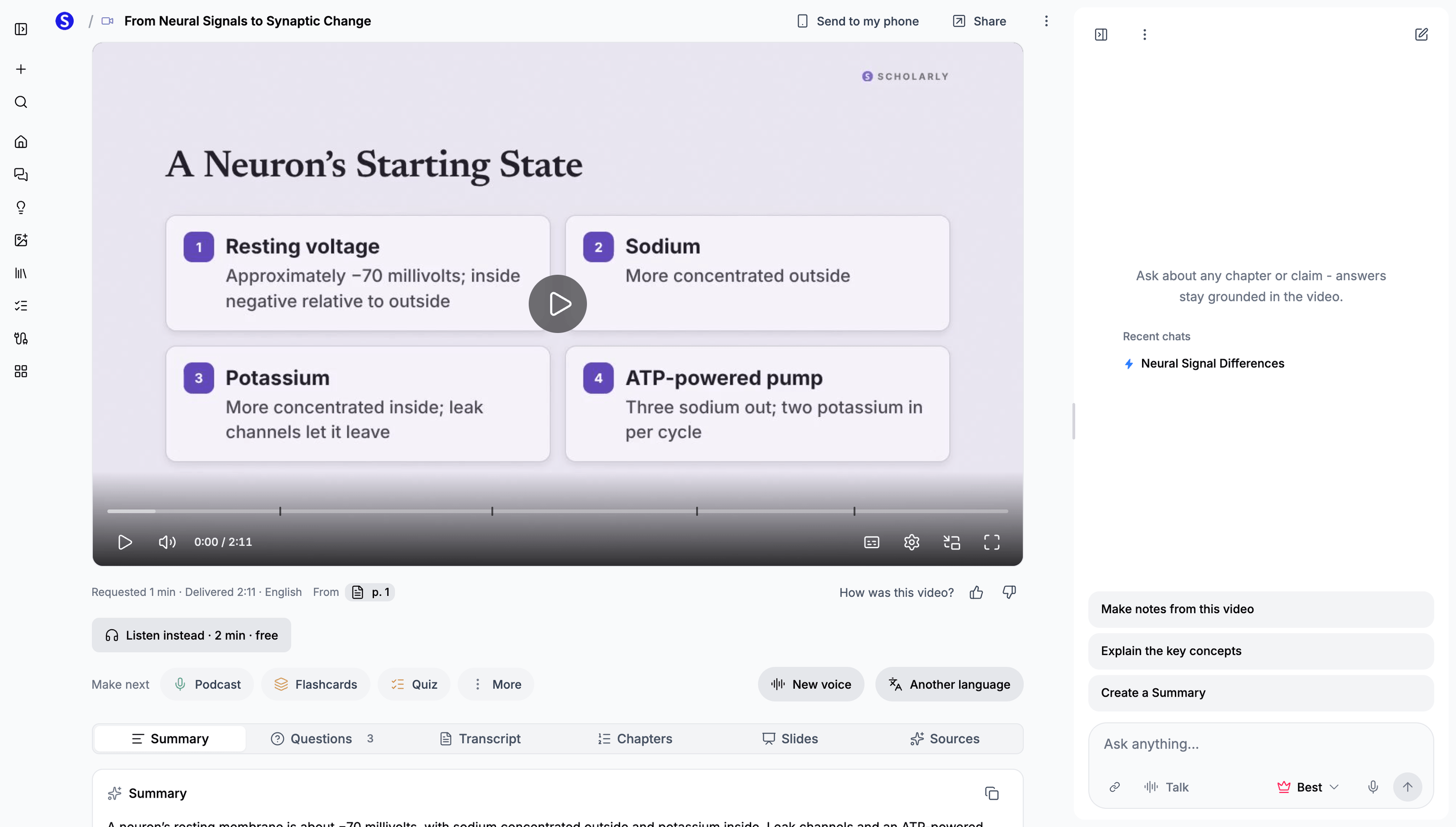
One source, five editions. Add it once and make what suits the moment.
Narrated and animated, with chapters, captions and a transcript. It runs the length you pick.
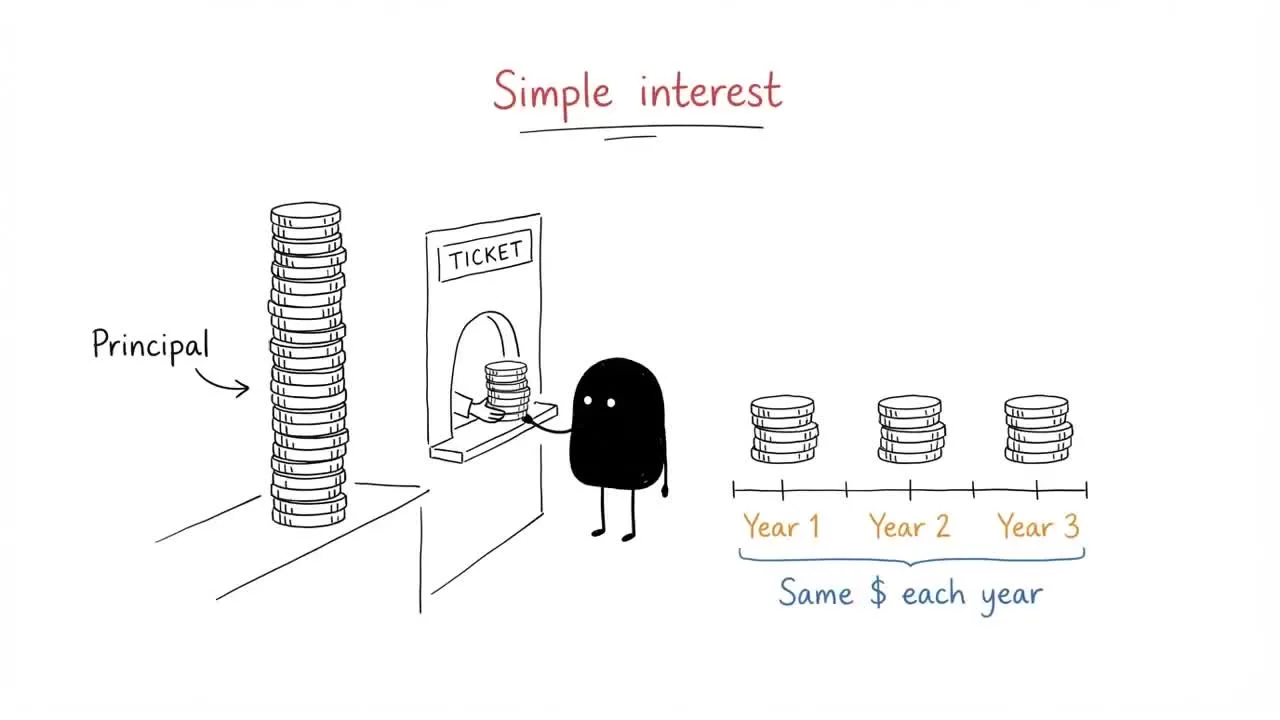
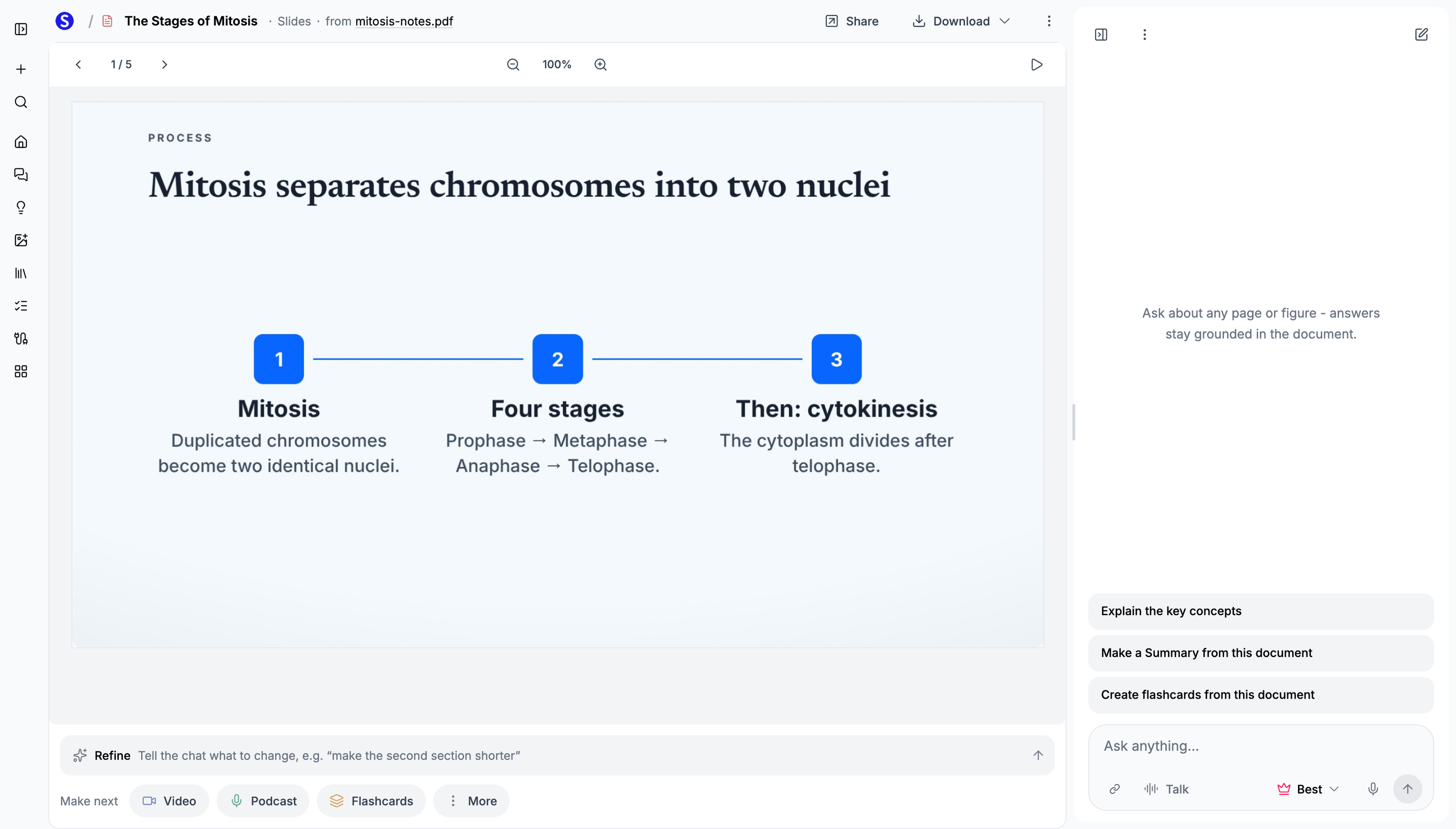
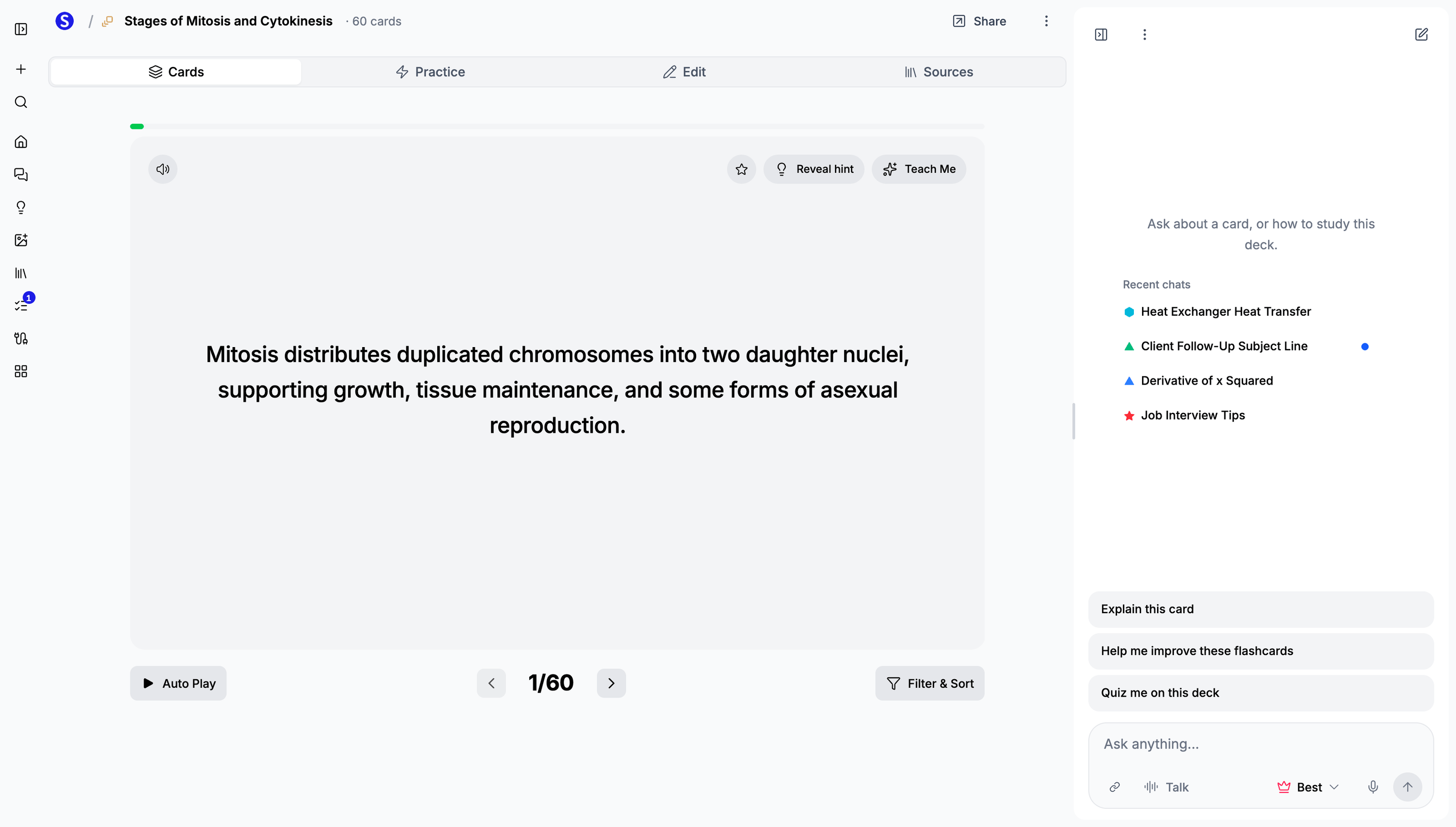
Also, from the same source: summaries, notes, recordings, research reports, mind maps, infographics, documents, PDF chat, 3D models, every feature
The lecture you wish you’d been given. At the length you pick.
Upload the material and Scholarly teaches it back: a narrated explanation with animations, charts and illustrations, timed to the real audio and built to the runtime you choose.

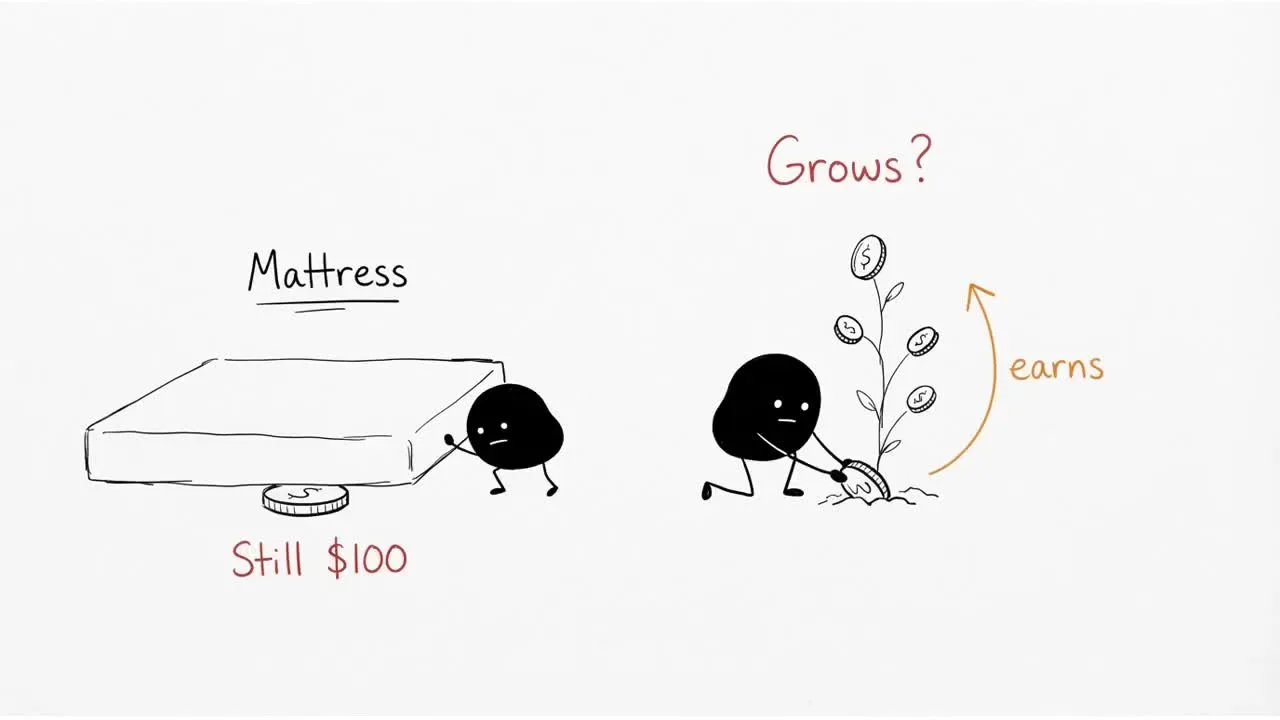
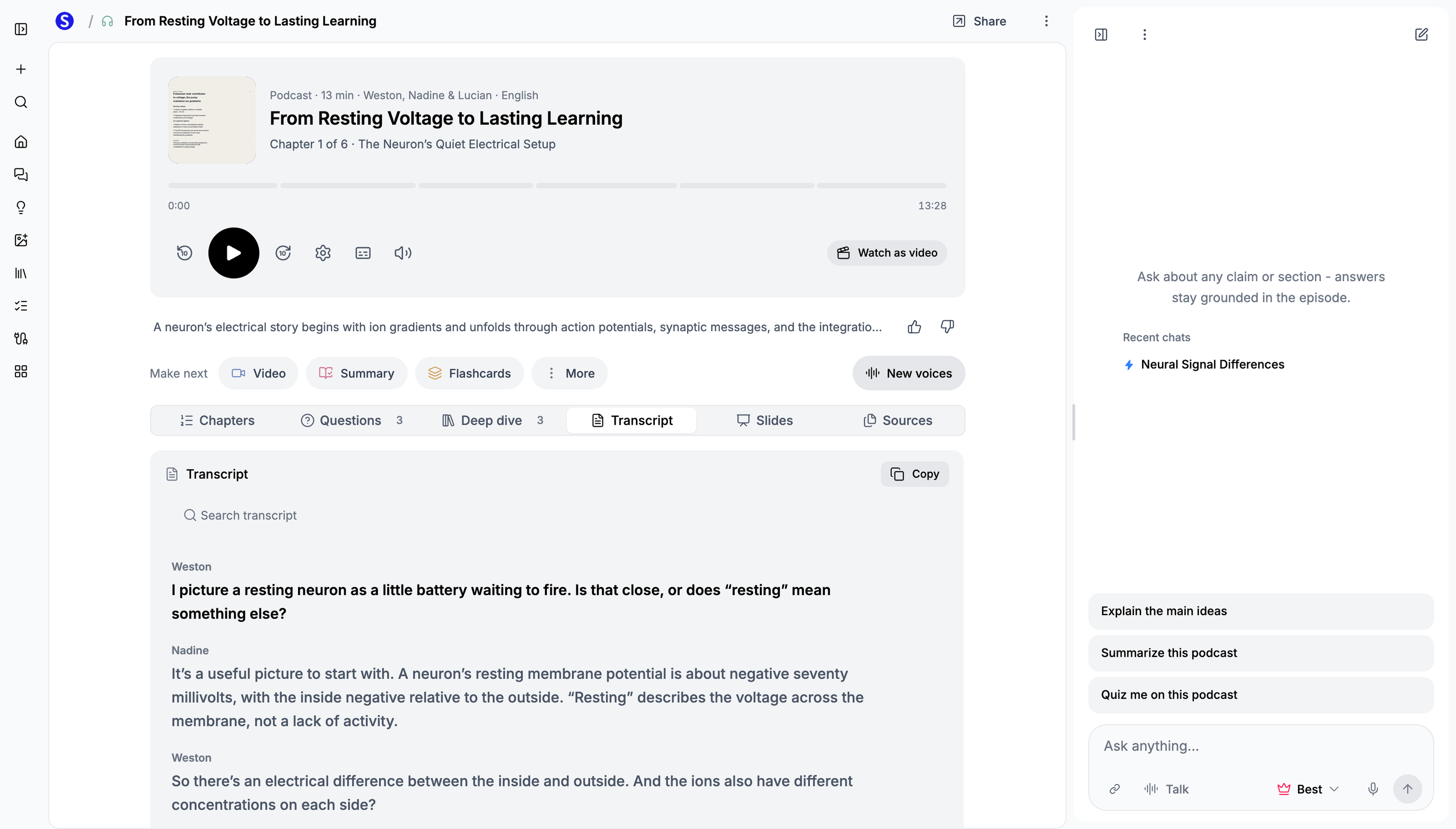
Fig. 1A Doodles lecture on how interest works.
Stops to check on you
Pause-to-quiz checkpoints ask you to recall what you just heard.
Easy to come back to
Chapters, captions, a transcript and a chat that knows the lecture.
Your choice of format
Six styles, from Standard Fast to Doodles, and a Short version in any of them.
Stop writing the cards. Start answering them.
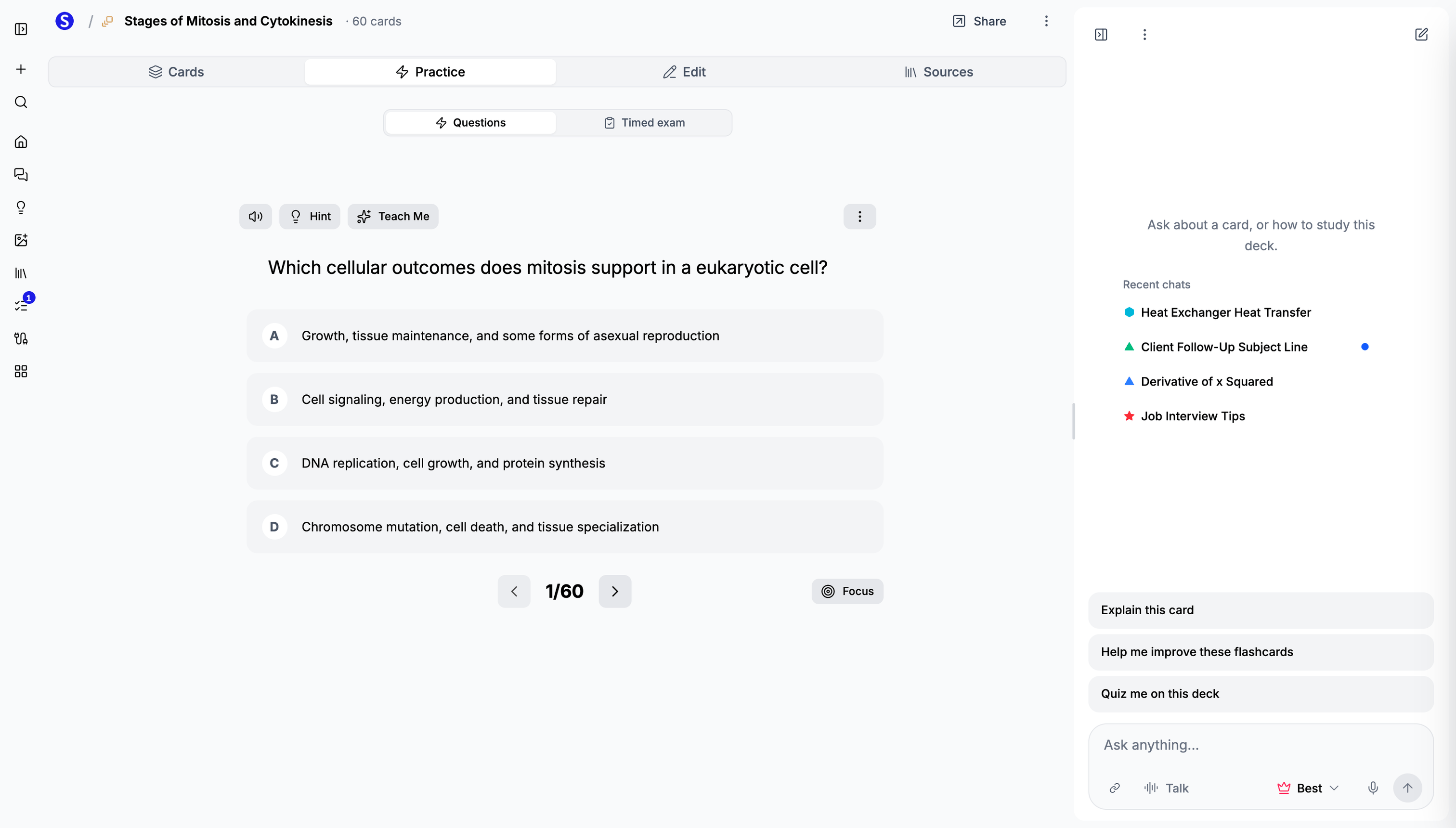
Scholarly builds editable decks from your own files. Sit a timed practice exam from any deck. If you think the answer key is wrong, challenge it and have it checked against the source.
I’ve found that not having to physically write out my flashcards has been incredibly beneficial.
 Isabelle, Student

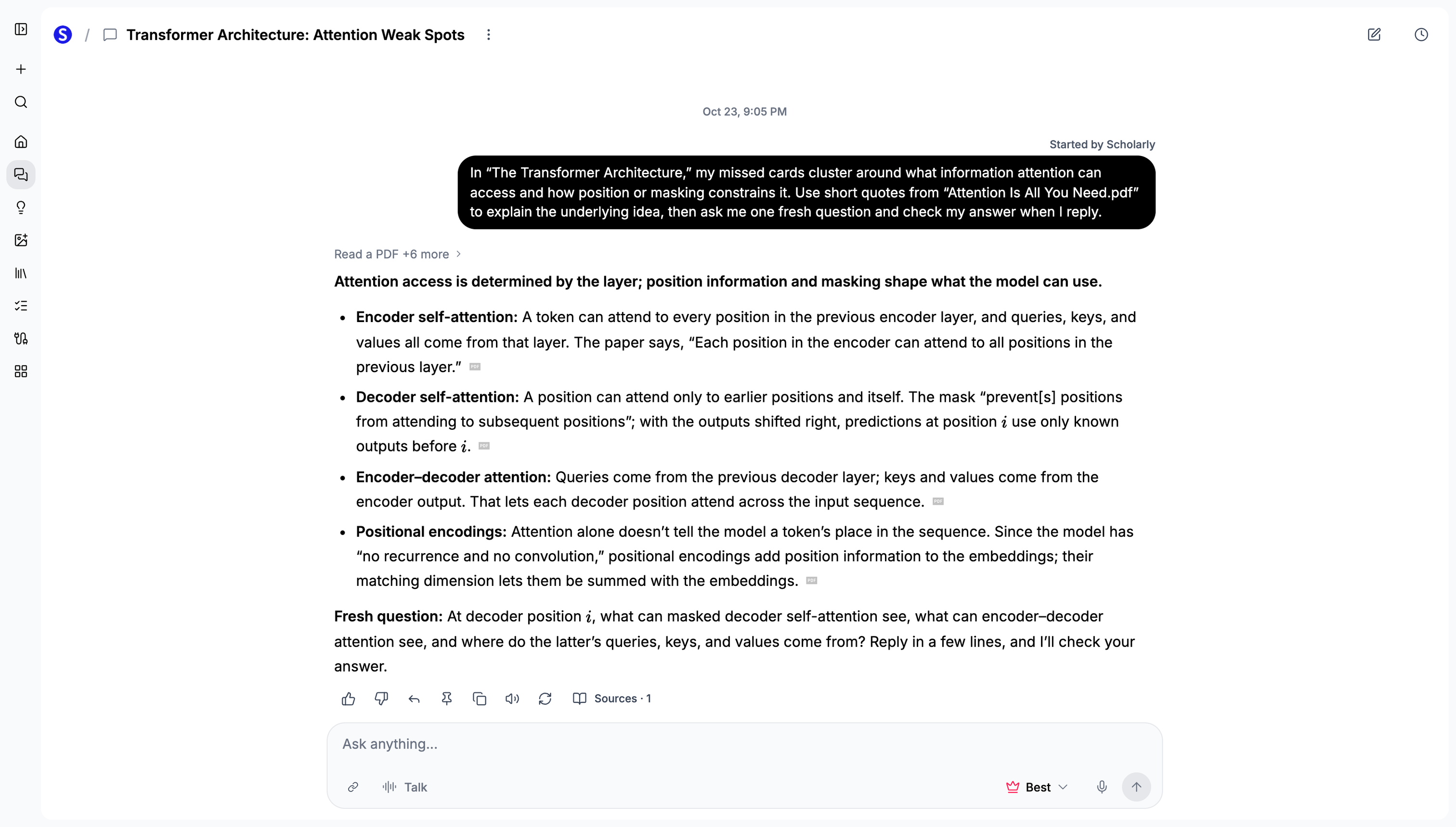
Answers you can check. A citation that does not lead to a source you added is removed before the answer is saved.
Stroke volume during exercise
During dynamic exercise, the skeletal muscle pump and increased respiratory effort raise venous return to the heart. The greater end-diastolic volume stretches the ventricular wall, and the ventricle responds with a more forceful contraction.
This length-tension relationship is known as the Frank-Starling mechanism. Sympathetic stimulation adds to it by raising contractility at any given filling pressure, so more blood leaves with each beat.
Why does stroke volume go up when I exercise?
The instructions, in full. There are three.
- Chapter 4.pdf38 pagesTuesday lecture.m4a52 minMy notesPage
1Add what you have.
A PDF, your notes, a recording, a video or a link. Or record a lecture or meeting live.
- Video lecturePodcastSlidesFlashcardsSummaryJust ask
2Say what you need.
A lecture, a podcast, a deck, a set of cards. Or skip all that and just ask a question.
- The deadline moved from 30 days to 15 p. 13Compliance handbook 2024.pdfSample
3Check its work.
Answers cite the sources they used, so you can open the original and judge for yourself.
Letters
It helps me digest information fast. I like using Scholarly to get a gist out of a topic before a lecture.
 Jonie Vince, Scholarly user
Scholarly has enhanced the quality of notes and questions I administer to my tutees. Insightful, to the point.
I am enrolled in online university and my classes are all PDF based. All I do is upload the PDF and it creates flashcards decks for me.
 Alexandra, Student
The same product, with colleagues. Shared source libraries, roles, activity reporting and one bill.
Turn onboarding documents, product training and sales material into videos and decks. Self-serve from 1 to 29 seats, with models from several AI labs so no single vendor can stop your work.


Start with one file. Leave with the lecture.
Add your first PDF, recording or set of notes and see what it turns into.
No credit card required