/
Functional Groups and Biological Molecules
Save to my account
Sign up
Functional Groups and Biological Molecules
Unit 1- Functional Groups and Biological Molecules
Study
1
Question
Answer
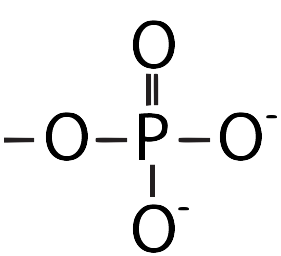
Phosphate group
2
Question
Answer
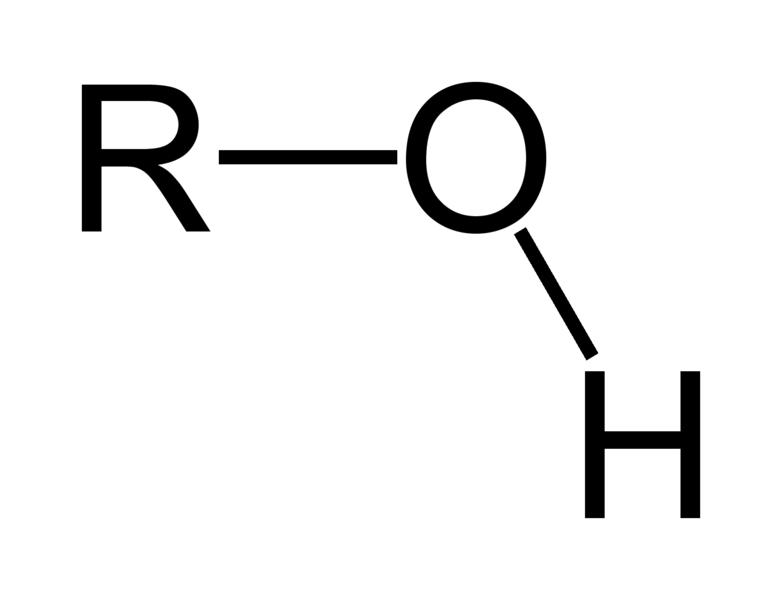
A hydroxyl group
3
Question
Answer
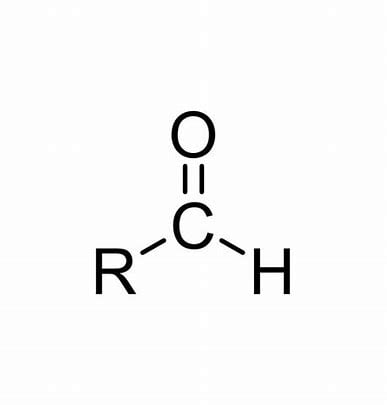
carbonyl group
4
Question
Answer
ketone
5
Question
Answer
A carboxyl group
6
Question
What are the three main classifications of biological molecules?
Answer
The three main classifications of biological molecules are carbohydrates, lipids, and proteins. Each has distinct structures and functions.
7
Question
How does the presence of hydroxyl groups affect a molecule?
Answer
Hydroxyl groups increase the polarity of a molecule, allowing it to form hydrogen bonds with water, enhancing solubility in aqueous environments.
8
Question
Answer
Amino group
9
Question
Answer
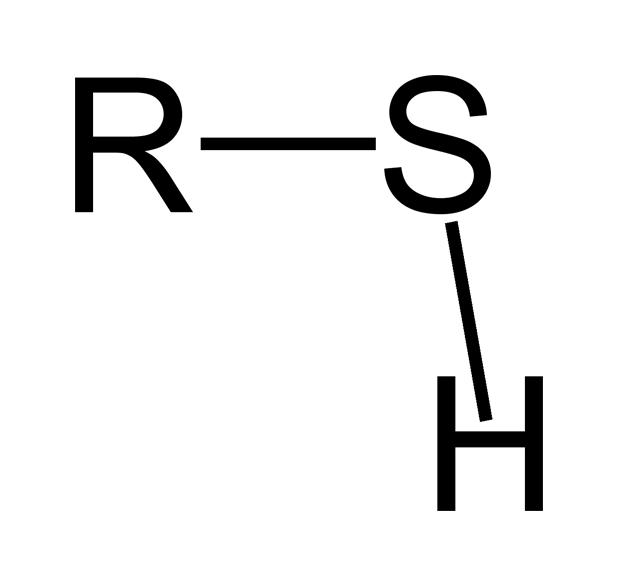
Sulfhydryl
10
Question
What are secondary structures in proteins?
Answer
Secondary structures refer to local folded structures that form within a protein due to hydrogen bonding between backbone amides; common types include alpha helices and beta sheets.
11
Question
What is tertiary structure in proteins?
Answer
Tertiary structure is the overall three-dimensional shape of a protein formed by interactions between R groups (side chains) of the amino acids, such as hydrophobic interactions, ionic bonds, and disulfide bridges.
12
Question
Define quaternary structure in proteins.
Answer
Quaternary structure refers to the assembly of multiple polypeptide chains into a single functional protein complex, held together by various interactions among the R groups.
13
Question
What is the difference between hypertonic, hypotonic, and isotonic solutions?
Answer
Hypertonic solutions have a higher solute concentration than the inside of the cell, causing cells to shrink; hypotonic solutions have a lower solute concentration, causing cells to swell; isotonic solutions have equal solute concentration, resulting in no net movement of water.
14
Question
What is endocytosis and exocytosis?
Answer
Endocytosis is the process by which a cell engulfs molecules or particles from outside, incorporating them into the cell; exocytosis is the reverse process where materials are expelled from a cell through vesicles.
15
Question
What is simple diffusion?
Answer
Simple diffusion is the passive movement of molecules from an area of higher concentration to an area of lower concentration across a membrane, without the need for energy or transport proteins.
16
Question
What is phagocytosis?
Answer
Phagocytosis is a type of endocytosis where a cell engulfs large particles or microorganisms, forming a phagosome that typically fuses with lysosomes for digestion.
17
Question
What is pinocytosis?
Answer
Pinocytosis is a type of endocytosis sometimes referred to as 'cell drinking,' where the cell takes up extracellular fluid and dissolved solutes by forming small vesicles.
18
Question
What is facilitated diffusion? Protein involved?
Answer
Facilitated diffusion is a passive transport mechanism that uses specific transmembrane proteins to help molecules cross the cell membrane without expending energy.
19
Question
What is diffusion?
Answer
Diffusion is the process by which molecules spread from an area of high concentration to an area of low concentration, resulting in a net movement of particles until equilibrium is reached.
20
Question
What is active transport?
Answer
Active transport is the movement of molecules across a cell membrane from a region of lower concentration to a region of higher concentration, which requires energy, typically in the form of ATP.
21
Question
What are lipids?
Answer
Lipids are a group of hydrophobic organic molecules that are insoluble in water. They are characterized by a high proportion of C-H bonds, which makes them non-polar.
22
Question
What is an example of a lipid and its structure?
Answer
An example of a lipid is triglyceride, which has the general structure of H-C-O-O-C-C-C-C-C-C-C-C-C-H. It consists of glycerol and three fatty acids.
23
Question
Why are lipids considered non-polar?
Answer
Lipids are considered non-polar due to their high amount of C-H bonds, leading to hydrophobic properties, making them insoluble in water.
24
Question
What are proteins?
Answer
Proteins are large biomolecules composed of amino acids, which contain a high number of hydroxyl (O-H) groups, making them polar and soluble in water.
25
Question
What is an example of a protein and its structure?
Answer
An example of a protein is an amino acid, which has the structure H H-N-C-CO, with various side chains (R groups) that define different amino acids.
26
Question
What are carbohydrates?
Answer
Carbohydrates are organic molecules that consist of carbon, hydrogen, and oxygen, having a high number of O-H bonds. They are polar molecules and are soluble in water.
27
Question
What is an example of a carbohydrate and its structure?
Answer
An example of a carbohydrate is glucose, which has the structure CH2OH, with various hydroxyl groups (OH) indicating its polarity and solubility in water.
28
Question
Passive transport?
Answer
Passive Transport: high to low concentration, cell does not use energy. -Diffusion -Facilitated Diffusion -Osmosis